Stage 1: Three duas, three moments
These three duas are not interchangeable versions of the same thing. The long dua below suits ongoing low mood or anxiety. The short dua is the Prophet’s ﷺ habitual formula, said often rather than kept for one occasion. Dua al-karb is specifically for a moment of acute distress or crisis, not everyday worry.
Stage 2: The long dua for anxiety
This is the fullest dua in the corpus for low mood and anxiety, and the one that asks for the Qur’an itself as the remedy.
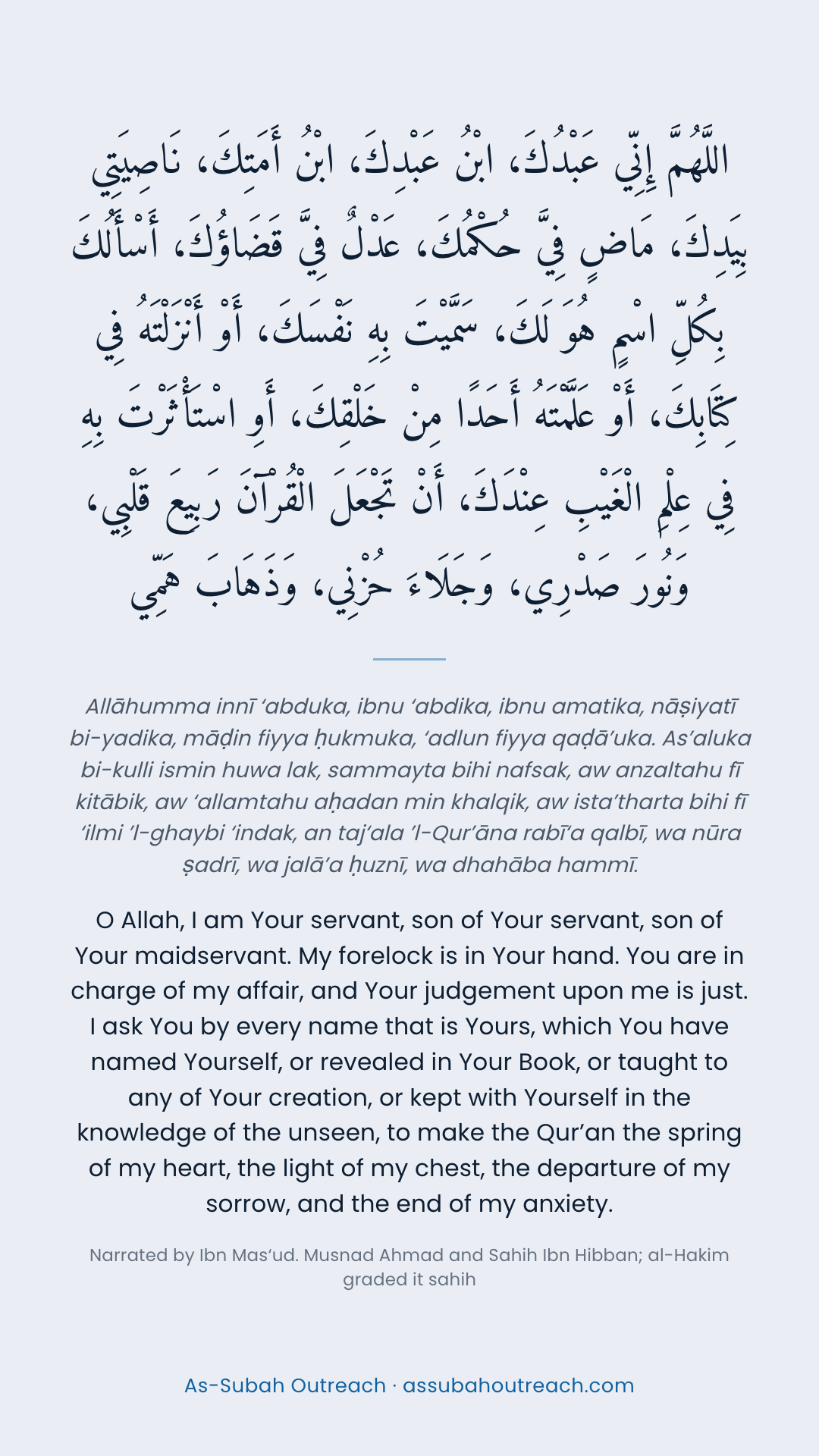
اللَّهُمَّ إِنِّي عَبْدُكَ، ابْنُ عَبْدِكَ، ابْنُ أَمَتِكَ، نَاصِيَتِي بِيَدِكَ، مَاضٍ فِيَّ حُكْمُكَ، عَدْلٌ فِيَّ قَضَاؤُكَ، أَسْأَلُكَ بِكُلِّ اسْمٍ هُوَ لَكَ، سَمَّيْتَ بِهِ نَفْسَكَ، أَوْ أَنْزَلْتَهُ فِي كِتَابِكَ، أَوْ عَلَّمْتَهُ أَحَدًا مِنْ خَلْقِكَ، أَوِ اسْتَأْثَرْتَ بِهِ فِي عِلْمِ الْغَيْبِ عِنْدَكَ، أَنْ تَجْعَلَ الْقُرْآنَ رَبِيعَ قَلْبِي، وَنُورَ صَدْرِي، وَجَلَاءَ حُزْنِي، وَذَهَابَ هَمِّي
Allāhumma innī ‘abduka, ibnu ‘abdika, ibnu amatika, nāṣiyatī bi-yadika, māḍin fiyya ḥukmuka, ‘adlun fiyya qaḍā’uka. As’aluka bi-kulli ismin huwa lak, sammayta bihi nafsak, aw anzaltahu fī kitābik, aw ‘allamtahu aḥadan min khalqik, aw ista’tharta bihi fī ‘ilmi ’l-ghaybi ‘indak, an taj‘ala ’l-Qur’āna rabī‘a qalbī, wa nūra ṣadrī, wa jalā’a ḥuznī, wa dhahāba hammī.
O Allah, I am Your servant, son of Your servant, son of Your maidservant. My forelock is in Your hand. You are in charge of my affair, and Your judgement upon me is just. I ask You by every name that is Yours, which You have named Yourself, or revealed in Your Book, or taught to any of Your creation, or kept with Yourself in the knowledge of the unseen, to make the Qur’an the spring of my heart, the light of my chest, the departure of my sorrow, and the end of my anxiety.
Stage 3: The dua the Prophet ﷺ said often
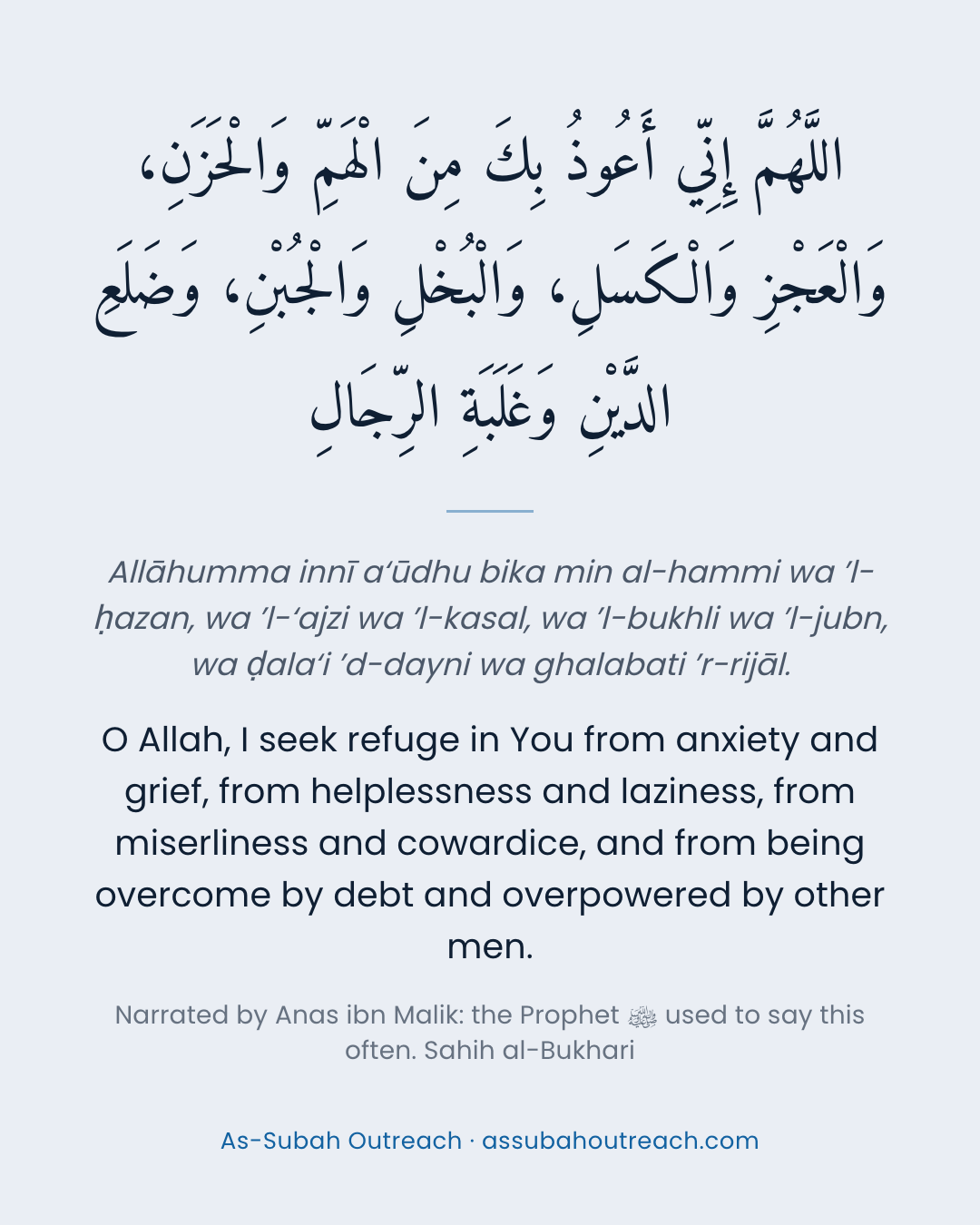
اللَّهُمَّ إِنِّي أَعُوذُ بِكَ مِنَ الْهَمِّ وَالْحَزَنِ، وَالْعَجْزِ وَالْكَسَلِ، وَالْبُخْلِ وَالْجُبْنِ، وَضَلَعِ الدَّيْنِ وَغَلَبَةِ الرِّجَالِ
Allāhumma innī a‘ūdhu bika min al-hammi wa ’l-ḥazan, wa ’l-‘ajzi wa ’l-kasal, wa ’l-bukhli wa ’l-jubn, wa ḍala‘i ’d-dayni wa ghalabati ’r-rijāl.
O Allah, I seek refuge in You from anxiety and grief, from helplessness and laziness, from miserliness and cowardice, and from being overcome by debt and overpowered by other men.
Stage 4: Dua al-karb: for a moment of crisis
The early generations called this “dua al-karb,” the dua for distress, by name. It is for a sudden, acute moment, not an everyday worry.
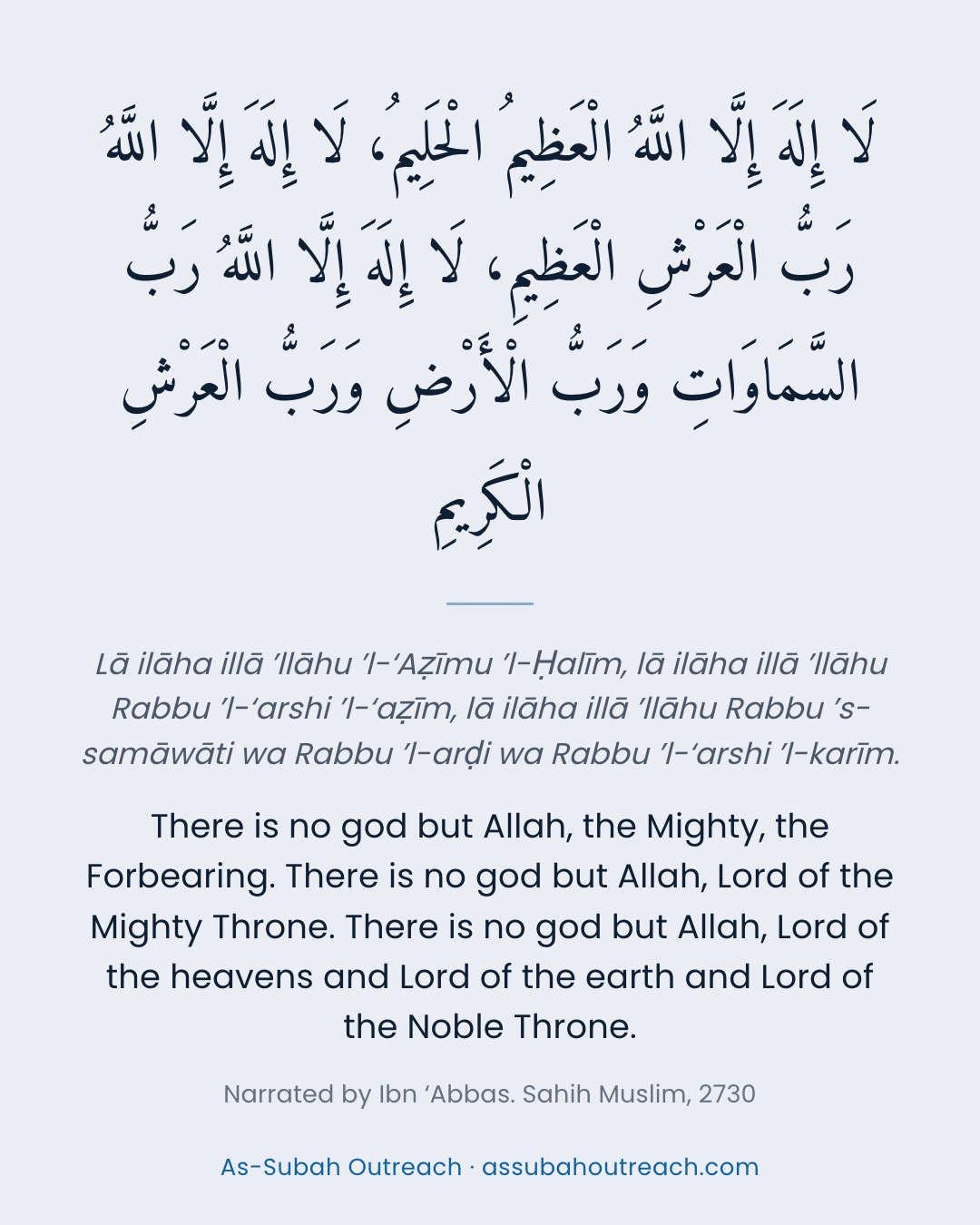
لَا إِلَهَ إِلَّا اللَّهُ الْعَظِيمُ الْحَلِيمُ، لَا إِلَهَ إِلَّا اللَّهُ رَبُّ الْعَرْشِ الْعَظِيمِ، لَا إِلَهَ إِلَّا اللَّهُ رَبُّ السَّمَاوَاتِ وَرَبُّ الْأَرْضِ وَرَبُّ الْعَرْشِ الْكَرِيمِ
Lā ilāha illā ’llāhu ’l-‘Aẓīmu ’l-Ḥalīm, lā ilāha illā ’llāhu Rabbu ’l-‘arshi ’l-‘aẓīm, lā ilāha illā ’llāhu Rabbu ’s-samāwāti wa Rabbu ’l-arḍi wa Rabbu ’l-‘arshi ’l-karīm.
There is no god but Allah, the Mighty, the Forbearing. There is no god but Allah, Lord of the Mighty Throne. There is no god but Allah, Lord of the heavens and Lord of the earth and Lord of the Noble Throne.