Stage 1: Sayyid al-Istighfar: the master of seeking forgiveness
اللَّهُمَّ أَنْتَ رَبِّي لَا إِلَهَ إِلَّا أَنْتَ، خَلَقْتَنِي وَأَنَا عَبْدُكَ، وَأَنَا عَلَى عَهْدِكَ وَوَعْدِكَ مَا اسْتَطَعْتُ، أَبُوءُ لَكَ بِنِعْمَتِكَ، وَأَبُوءُ لَكَ بِذَنْبِي، فَاغْفِرْ لِي فَإِنَّهُ لَا يَغْفِرُ الذُّنُوبَ إِلَّا أَنْتَ، أَعُوذُ بِكَ مِنْ شَرِّ مَا صَنَعْتُ
Allāhumma anta rabbī lā ilāha illā anta, khalaqtanī wa ana ‘abduka, wa ana ‘alā ‘ahdika wa wa‘dika ma ’staṭa‘tu, abū’u laka bini‘matika, wa abū’u laka bidhanbī, fa-ghfir lī fa-innahu lā yaghfiru ’l-dhunūba illā anta, a‘ūdhu bika min sharri mā ṣana‘tu.
O Allah, You are my Lord, there is no god but You. You created me and I am Your servant, and I hold to Your covenant and promise as far as I am able. I acknowledge Your favour upon me, and I acknowledge my sin, so forgive me, for none forgives sins but You. I seek refuge in You from the evil of what I have done.
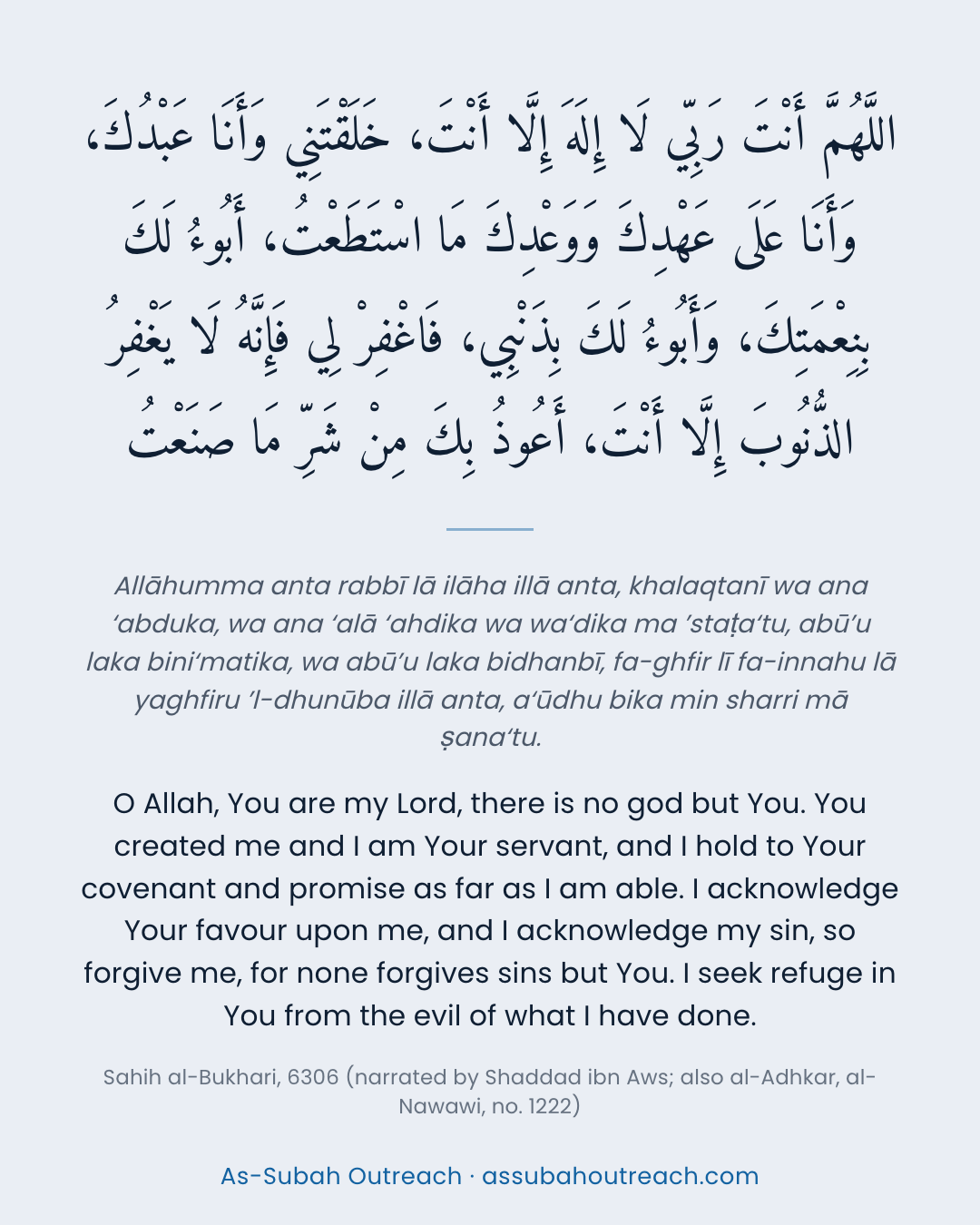
The hadith adds: whoever says it during the day with firm faith in it and dies that day before evening, or at night and dies before morning, is of the people of Paradise.
It is called “the master of istighfar” because it combines, in one dua, acknowledging Allah as Lord, holding to His covenant, and admitting both His favour and one’s own sin. Al-Adhkar places it both in its own istighfar chapter and in the morning and evening adhkar, where it is also said: see our morning and evening adhkar guide.
Stage 2: Astaghfirullah and other short duas
أَسْتَغْفِرُ اللَّهَ الْعَظِيمَ الَّذِي لَا إِلَهَ إِلَّا هُوَ الْحَيُّ الْقَيُّومُ وَأَتُوبُ إِلَيْهِ
Astaghfiru ’llāha ’l-‘aẓīma ’lladhī lā ilāha illā huwa ’l-ḥayyu ’l-qayyūmu wa atūbu ilayh.
I seek the forgiveness of Allah the Mighty, besides whom there is no god, the Living, the Sustainer, and I turn to Him in repentance.
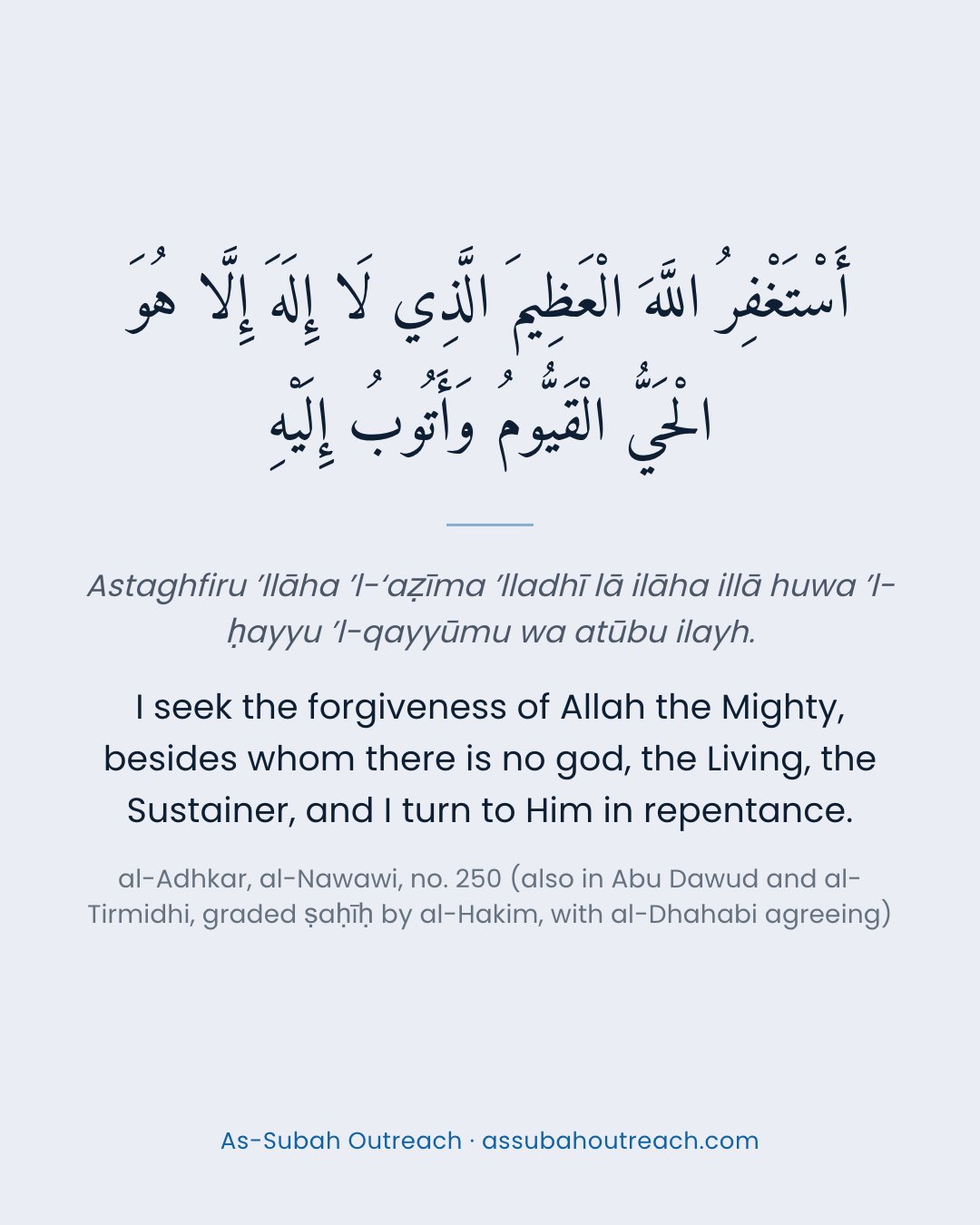
The hadith continues: whoever says this is forgiven even if he fled from the battlefield.
رَبِّ اغْفِرْ لِي وَتُبْ عَلَيَّ إِنَّكَ أَنْتَ التَّوَّابُ الرَّحِيمُ
Rabbi ’ghfir lī wa tub ‘alayya innaka anta ’l-tawwābu ’l-raḥīm.
My Lord, forgive me and accept my repentance, for You are the Ever-Returning, the Merciful.
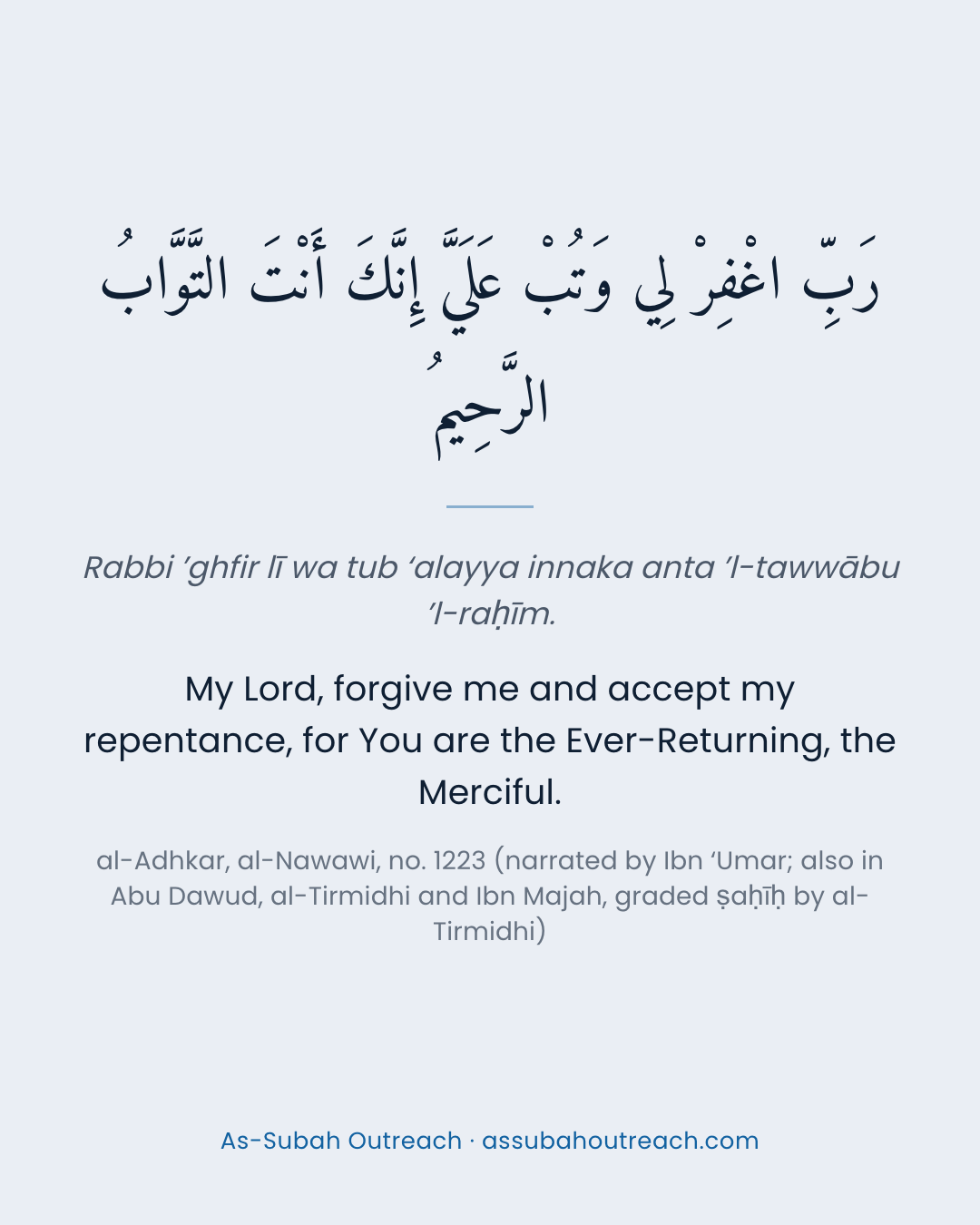
The Companions counted the Prophet ﷺ saying this one hundred times in a single sitting.
Stage 3: Does Allah forgive major sins?
قُلْ يَا عِبَادِيَ الَّذِينَ أَسْرَفُوا عَلَى أَنْفُسِهِمْ لَا تَقْنَطُوا مِنْ رَحْمَةِ اللَّهِ إِنَّ اللَّهَ يَغْفِرُ الذُّنُوبَ جَمِيعًا إِنَّهُ هُوَ الْغَفُورُ الرَّحِيمُ
Qul yā ‘ibādiya ’lladhīna asrafū ‘alā anfusihim lā taqnaṭū min raḥmati ’llāh, inna ’llāha yaghfiru ’l-dhunūba jamī‘ā, innahu huwa ’l-ghafūru ’l-raḥīm.
Say: O My servants who have transgressed against themselves, do not despair of the mercy of Allah. Allah forgives all sins. He is the Forgiving, the Merciful.
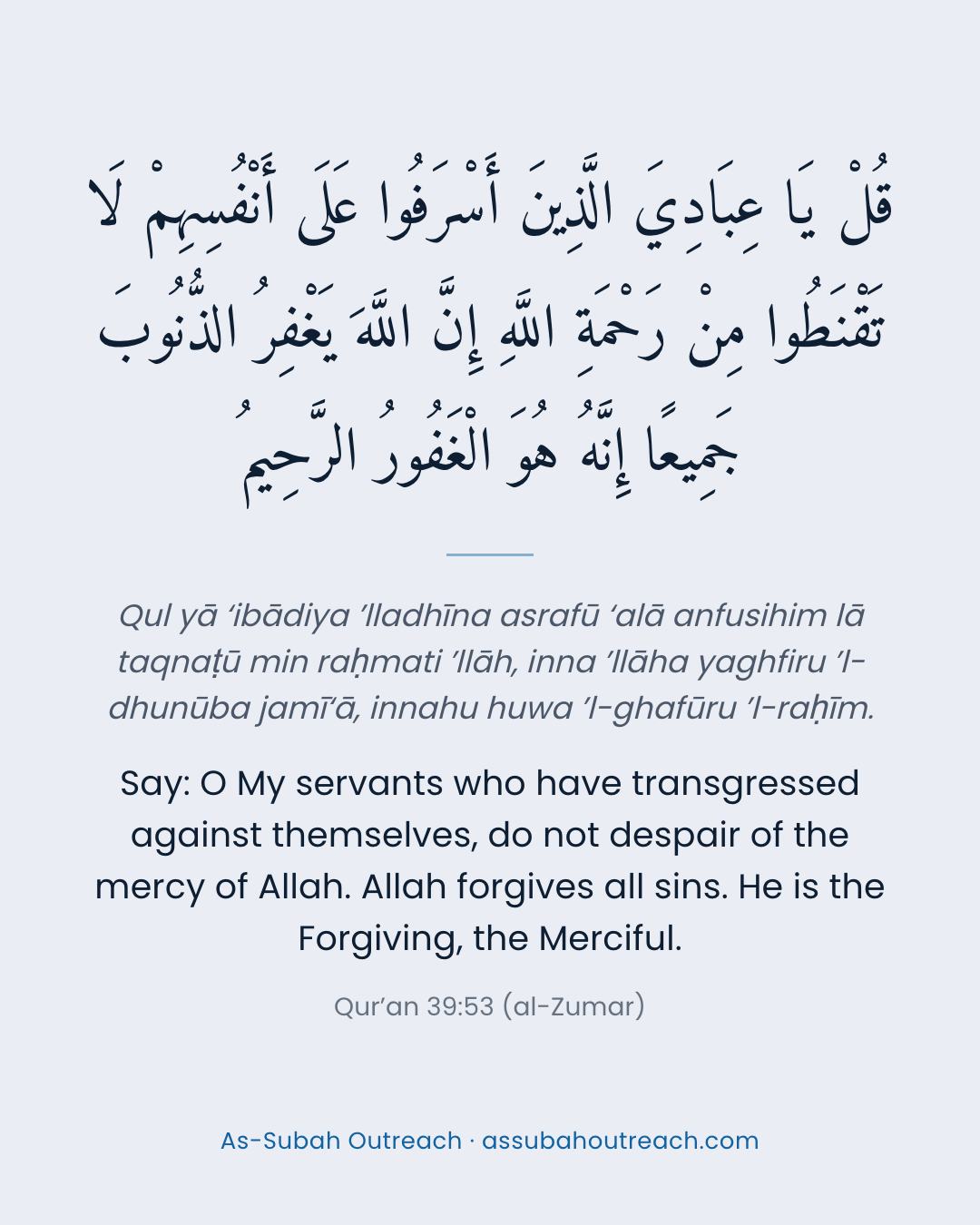
This verse is addressed to anyone who has wronged themselves, whatever the sin, without singling any one out by name. It is the verse to hold on to if you are carrying guilt over something specific and searching for reassurance that it, too, can be forgiven.
Stage 4: Making istighfar a daily habit
Sayyid al-Istighfar is placed in both the dedicated istighfar chapter and the morning and evening adhkar in al-Adhkar. It is meant to be a daily habit, not only said after a particular sin.