Stage 1: The ruqya for the sick
‘A’isha (may Allah be pleased with her) said the Prophet ﷺ used to say this over someone who was unwell, wiping with his right hand.
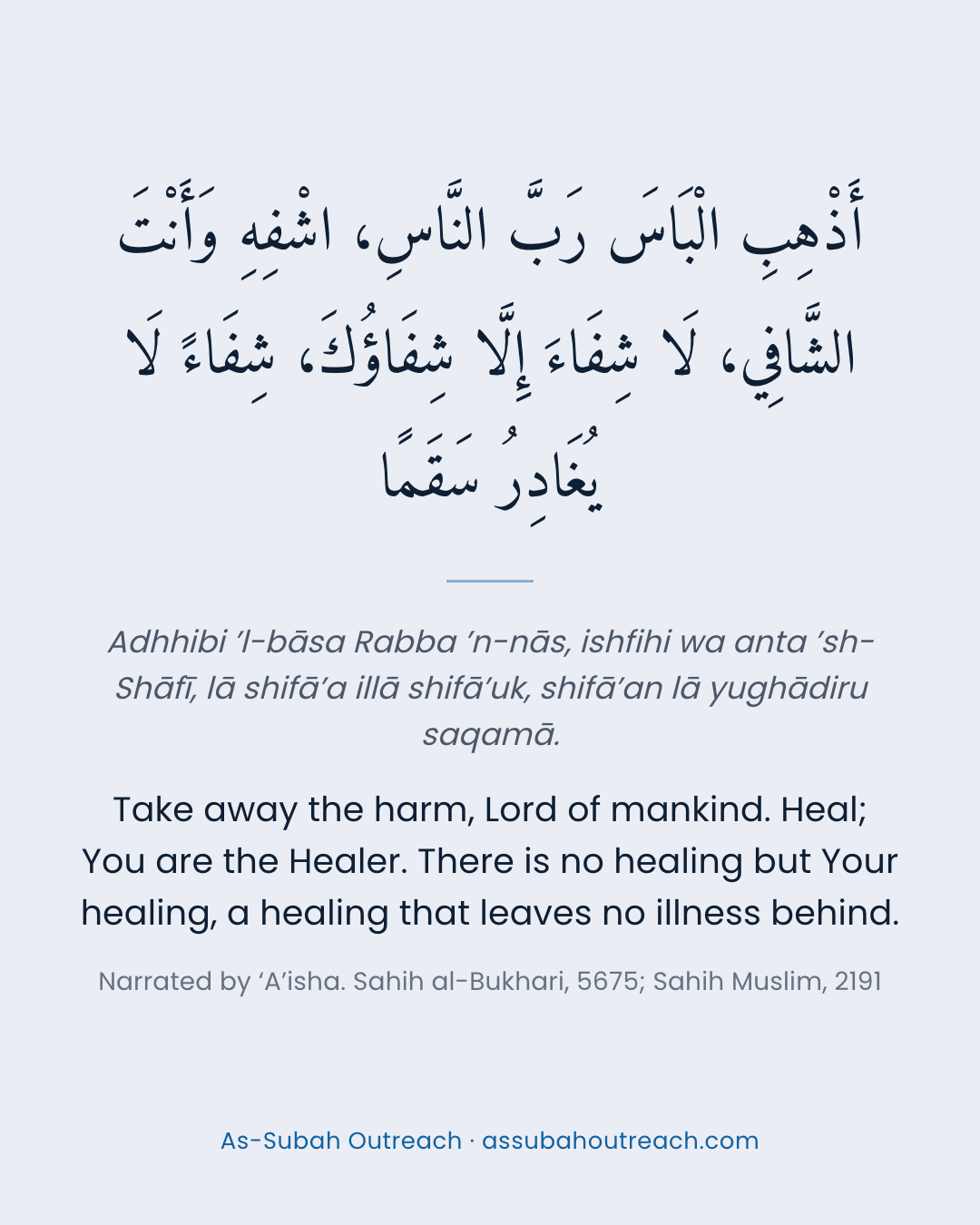
أَذْهِبِ الْبَاسَ رَبَّ النَّاسِ، اشْفِهِ وَأَنْتَ الشَّافِي، لَا شِفَاءَ إِلَّا شِفَاؤُكَ، شِفَاءً لَا يُغَادِرُ سَقَمًا
Adhhibi ’l-bāsa Rabba ’n-nās, ishfihi wa anta ’sh-Shāfī, lā shifā’a illā shifā’uk, shifā’an lā yughādiru saqamā.
Take away the harm, Lord of mankind. Heal; You are the Healer. There is no healing but Your healing, a healing that leaves no illness behind.
Say it while wiping the person gently with your right hand, if they are someone you can touch, such as a close relative. If not, the words alone are enough.
Ruqya and medicine are both means. The cure itself comes from Allah alone, as the dua says: there is no cure except His cure. Seeking treatment is encouraged, and it works only by His permission:
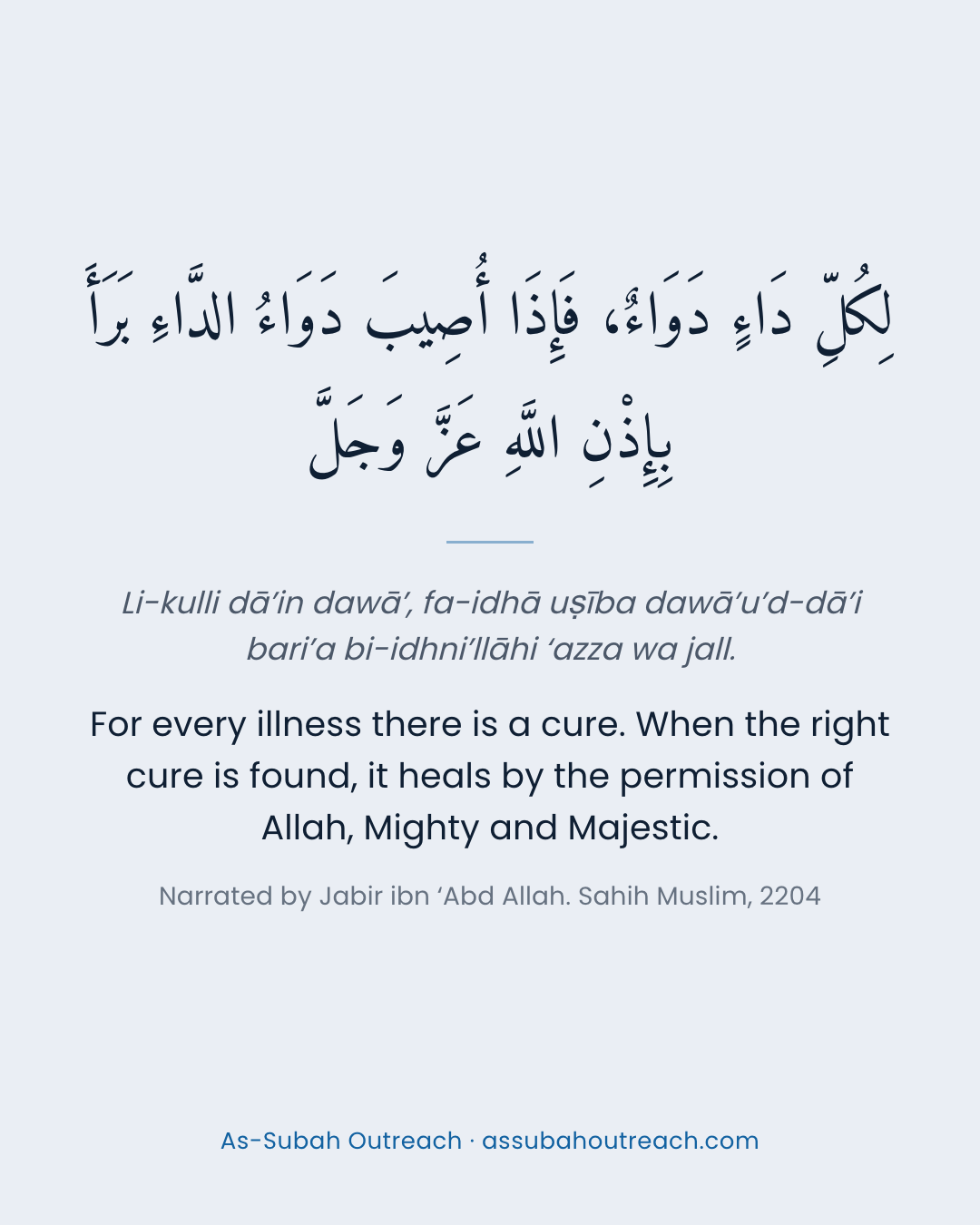
لِكُلِّ دَاءٍ دَوَاءٌ، فَإِذَا أُصِيبَ دَوَاءُ الدَّاءِ بَرَأَ بِإِذْنِ اللَّهِ عَزَّ وَجَلَّ
Li-kulli dā’in dawā’, fa-idhā uṣība dawā’u’d-dā’i bari’a bi-idhni’llāhi ‘azza wa jall.
For every illness there is a cure. When the right cure is found, it heals by the permission of Allah, Mighty and Majestic.
Stage 2: What to say when you visit someone sick
This is reported as something the Prophet ﷺ said when visiting the sick, reframing the illness itself as a possible means of being cleansed of sin, not only something to be removed.
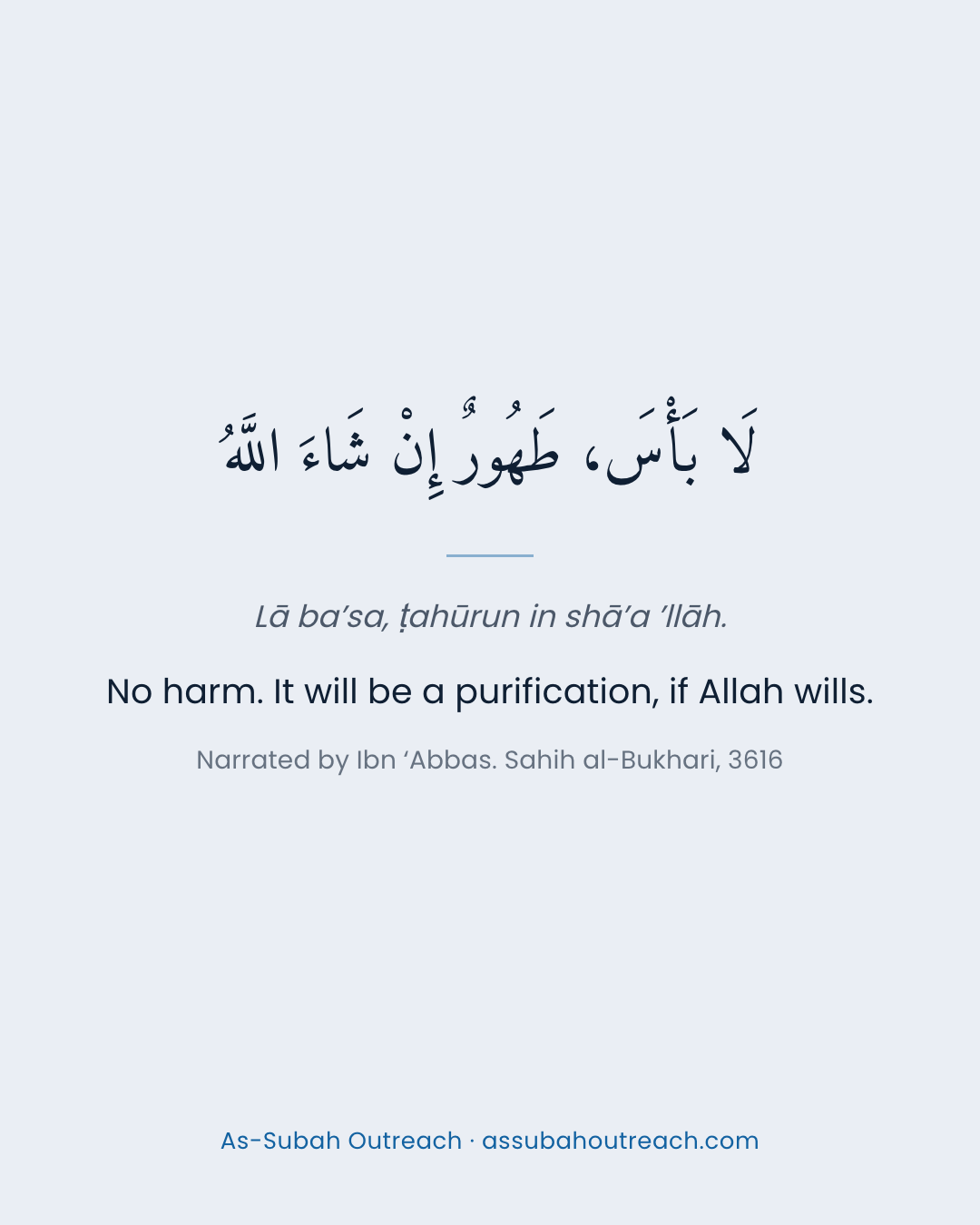
لَا بَأْسَ، طَهُورٌ إِنْ شَاءَ اللَّهُ
Lā ba’sa, ṭahūrun in shā’a ’llāh.
No harm. It will be a purification, if Allah wills.
Stage 3: If you are unwell yourself
‘A’isha said that when the Prophet ﷺ fell ill, he would recite the mu‘awwidhat, Surah al-Ikhlas, Surah al-Falaq and Surah al-Nas, over himself and blow. When his illness grew severe, she would recite them over him and wipe with his own hand, seeking the blessing of the hand that used to make such dua (Sahih al-Bukhari, 5016).
Stage 4: A dua said seven times
The hadith states that whoever visits someone sick whose time has not yet come, and says this seven times, will see them recover.
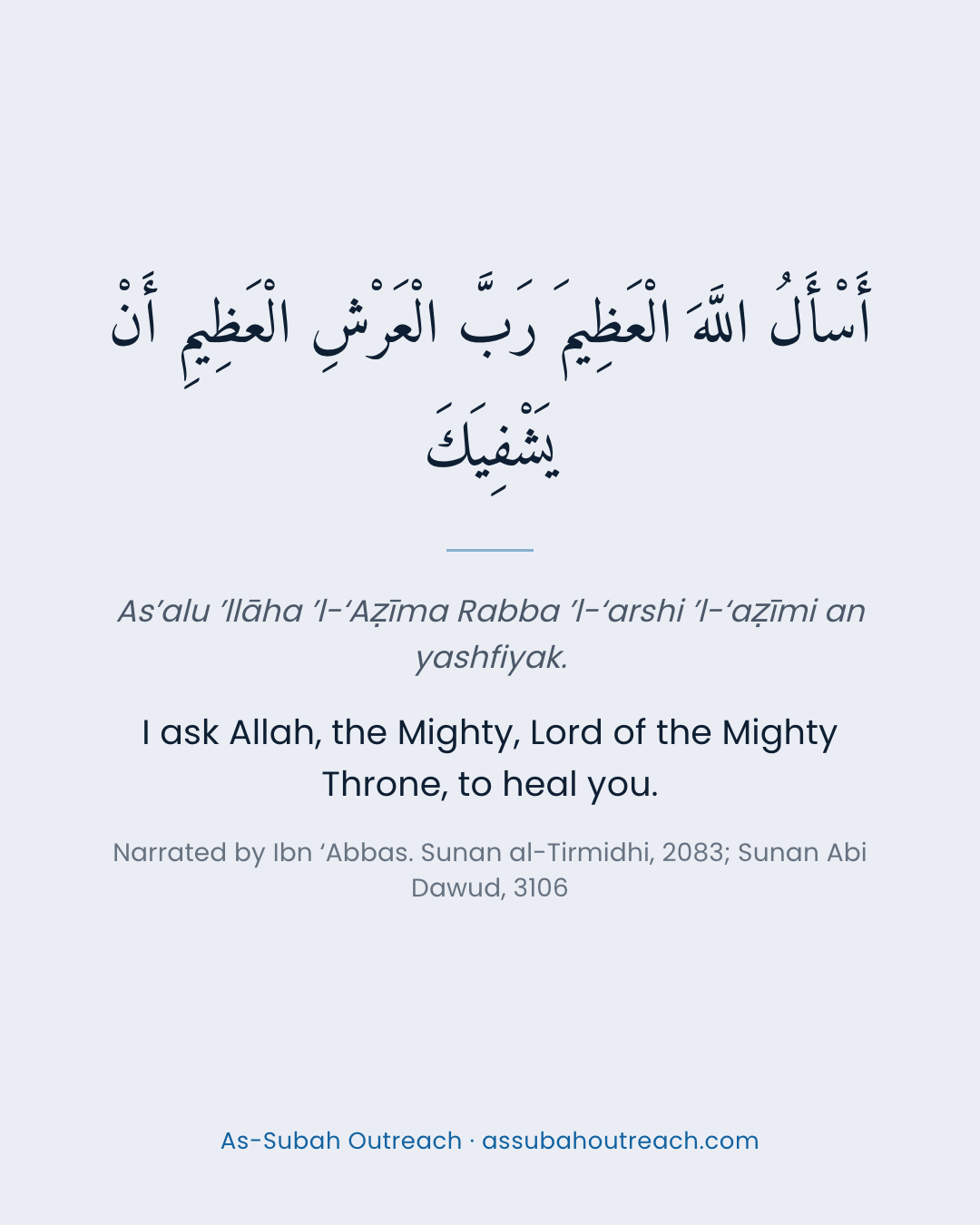
أَسْأَلُ اللَّهَ الْعَظِيمَ رَبَّ الْعَرْشِ الْعَظِيمِ أَنْ يَشْفِيَكَ
As’alu ’llāha ’l-‘Aẓīma Rabba ’l-‘arshi ’l-‘aẓīmi an yashfiyak.
I ask Allah, the Mighty, Lord of the Mighty Throne, to heal you.
Stage 5: The virtue of visiting the sick
The Prophet ﷺ described a visit to someone sick in these words.
إِذَا عَادَ الرَّجُلُ أَخَاهُ الْمُسْلِمَ مَشَى فِي خِرَافَةِ الْجَنَّةِ حَتَّى يَجْلِسَ، فَإِذَا جَلَسَ غَمَرَتْهُ الرَّحْمَةُ، فَإِنْ كَانَ غُدْوَةً صَلَّى عَلَيْهِ سَبْعُونَ أَلْفَ مَلَكٍ حَتَّى يُمْسِيَ، وَإِنْ كَانَ مَسَاءً صَلَّى عَلَيْهِ سَبْعُونَ أَلْفَ مَلَكٍ حَتَّى يُصْبِحَ
Idhā ‘āda ’r-rajulu akhāhu ’l-muslima mashā fī khirāfati ’l-jannati ḥattā yajlis, fa-idhā jalasa ghamarathu ’r-raḥmah, fa-in kāna ghudwatan ṣallā ‘alayhi sab‘ūna alfa malakin ḥattā yumsī, wa in kāna masā’an ṣallā ‘alayhi sab‘ūna alfa malakin ḥattā yuṣbiḥ.
When a man visits his sick Muslim brother, he walks in the harvest of Paradise until he sits, and once he sits, mercy covers him. If he visits in the morning, seventy thousand angels pray for him until evening; if in the evening, seventy thousand angels pray for him until morning.
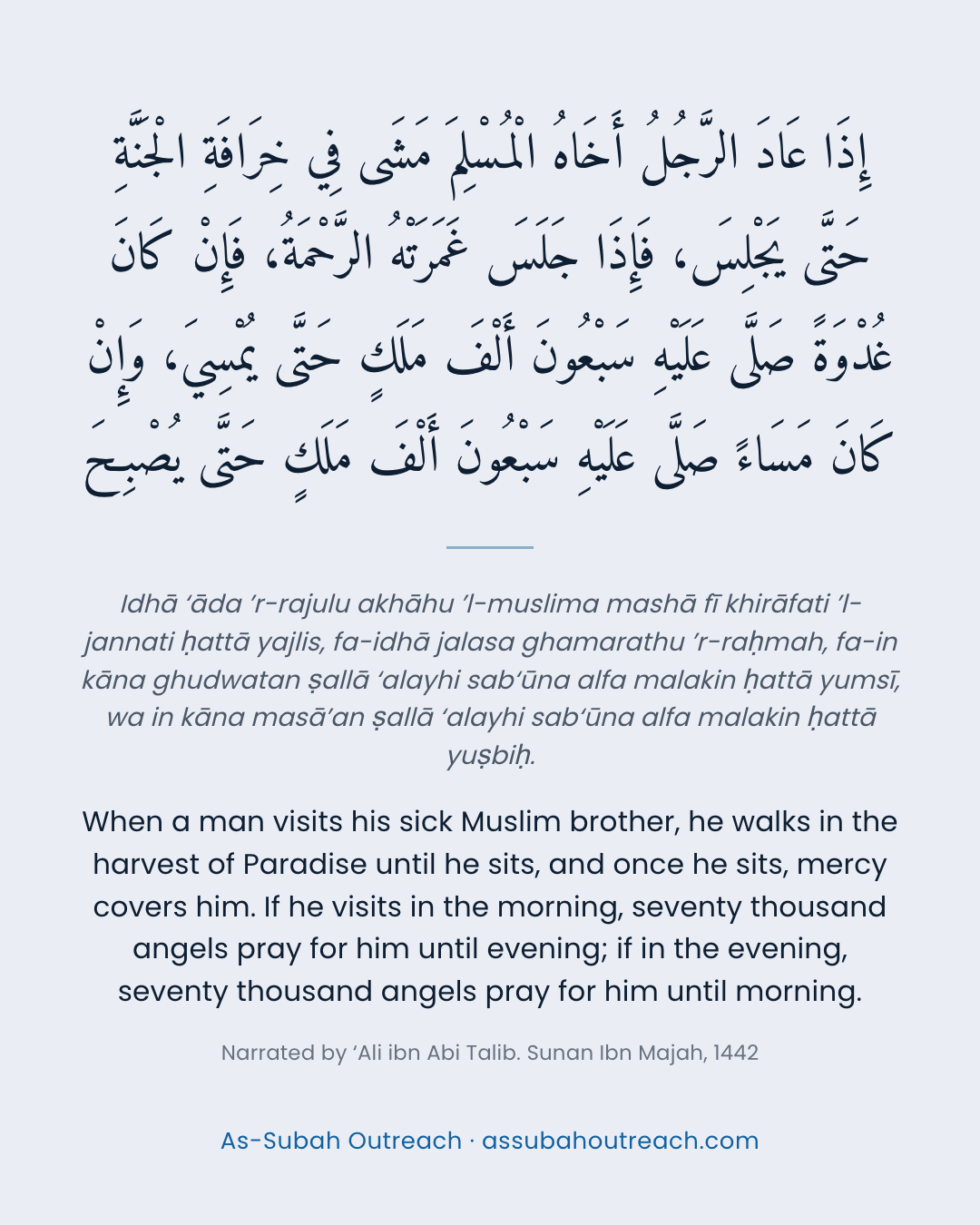
This applies to visiting a sick parent, friend or anyone else, not only the words said at the bedside.