Stage 1: Why Monday and Thursday
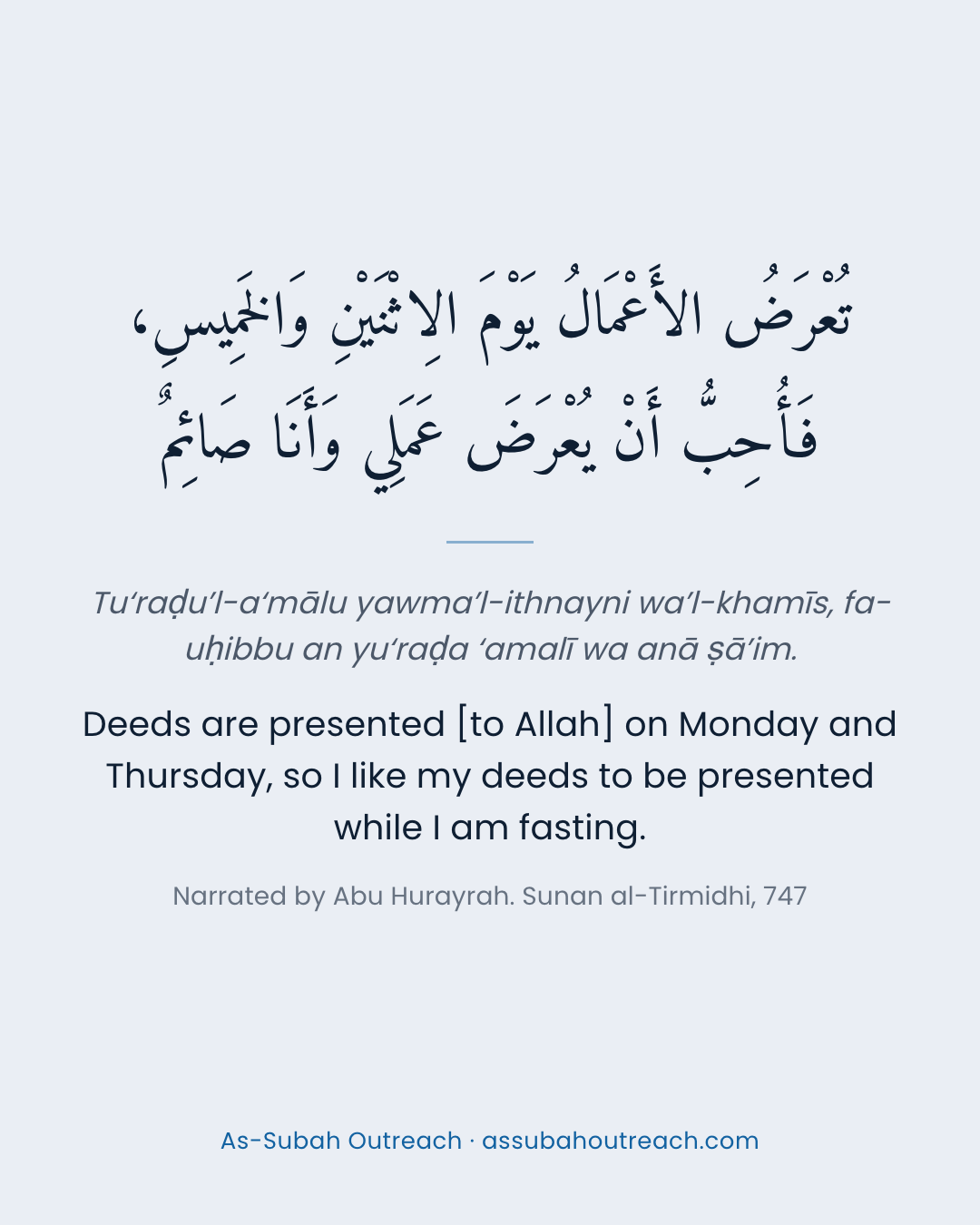
تُعْرَضُ الأَعْمَالُ يَوْمَ الِاثْنَيْنِ وَالخَمِيسِ، فَأُحِبُّ أَنْ يُعْرَضَ عَمَلِي وَأَنَا صَائِمٌ
Tu‘raḍu’l-a‘mālu yawma’l-ithnayni wa’l-khamīs, fa-uḥibbu an yu‘raḍa ‘amalī wa anā ṣā’im.
Deeds are presented [to Allah] on Monday and Thursday, so I like my deeds to be presented while I am fasting.
A second, separate reason applies to Monday specifically. When the Prophet ﷺ was asked about fasting on that day, he explained it with reference to his own life.
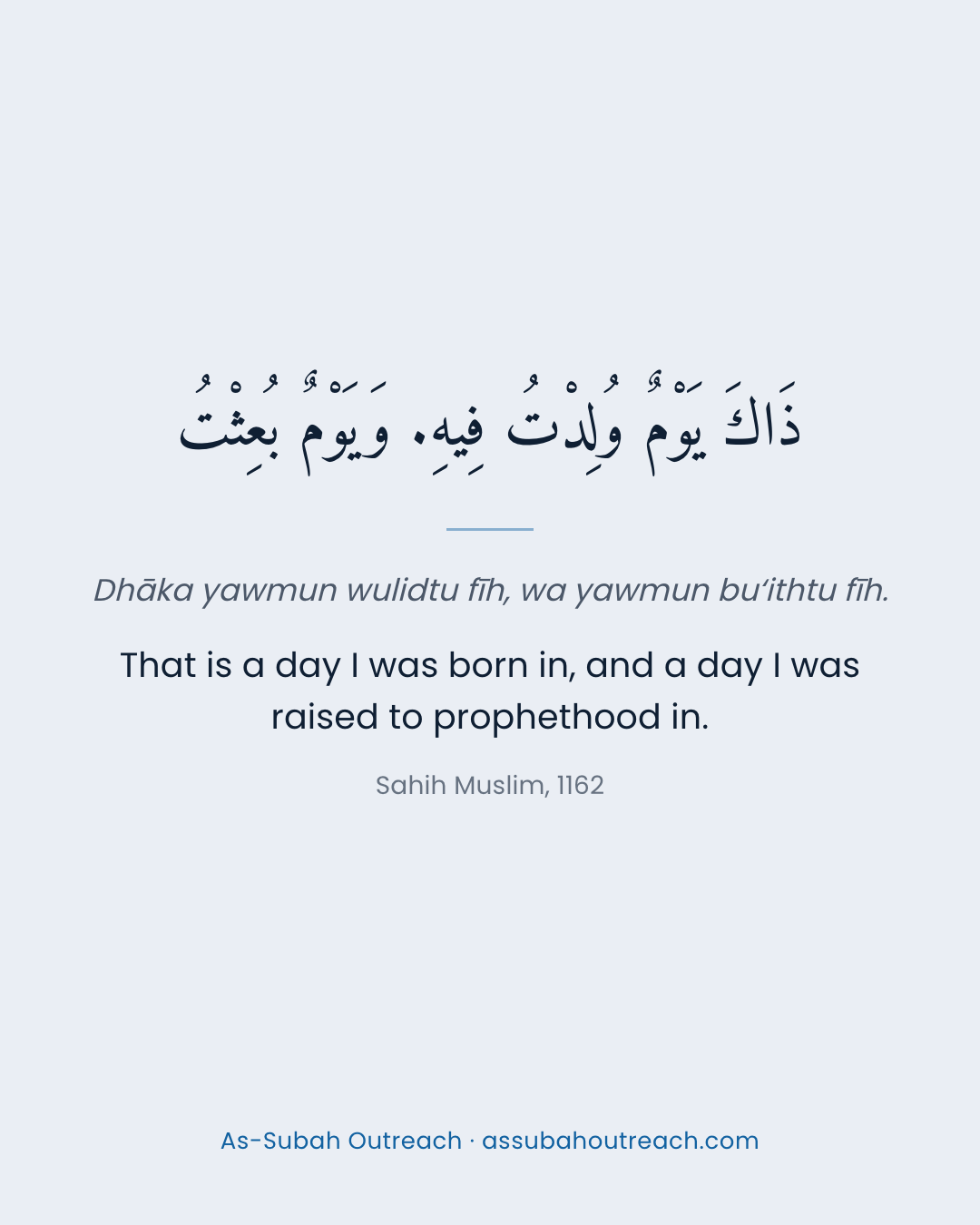
ذَاكَ يَوْمٌ وُلِدْتُ فِيهِ. وَيَوْمٌ بُعِثْتُ
Dhāka yawmun wulidtu fīh, wa yawmun bu‘ithtu fīh.
That is a day I was born in, and a day I was raised to prophethood in.
Worth knowing
These are two distinct reasons for two different things. The “deeds are presented” hadith covers both Monday and Thursday together; the birth and prophethood hadith explains Monday on its own. It is more accurate to keep them separate than to treat one hadith as covering both days.
Stage 2: The Prophet ﷺ fasted them regularly
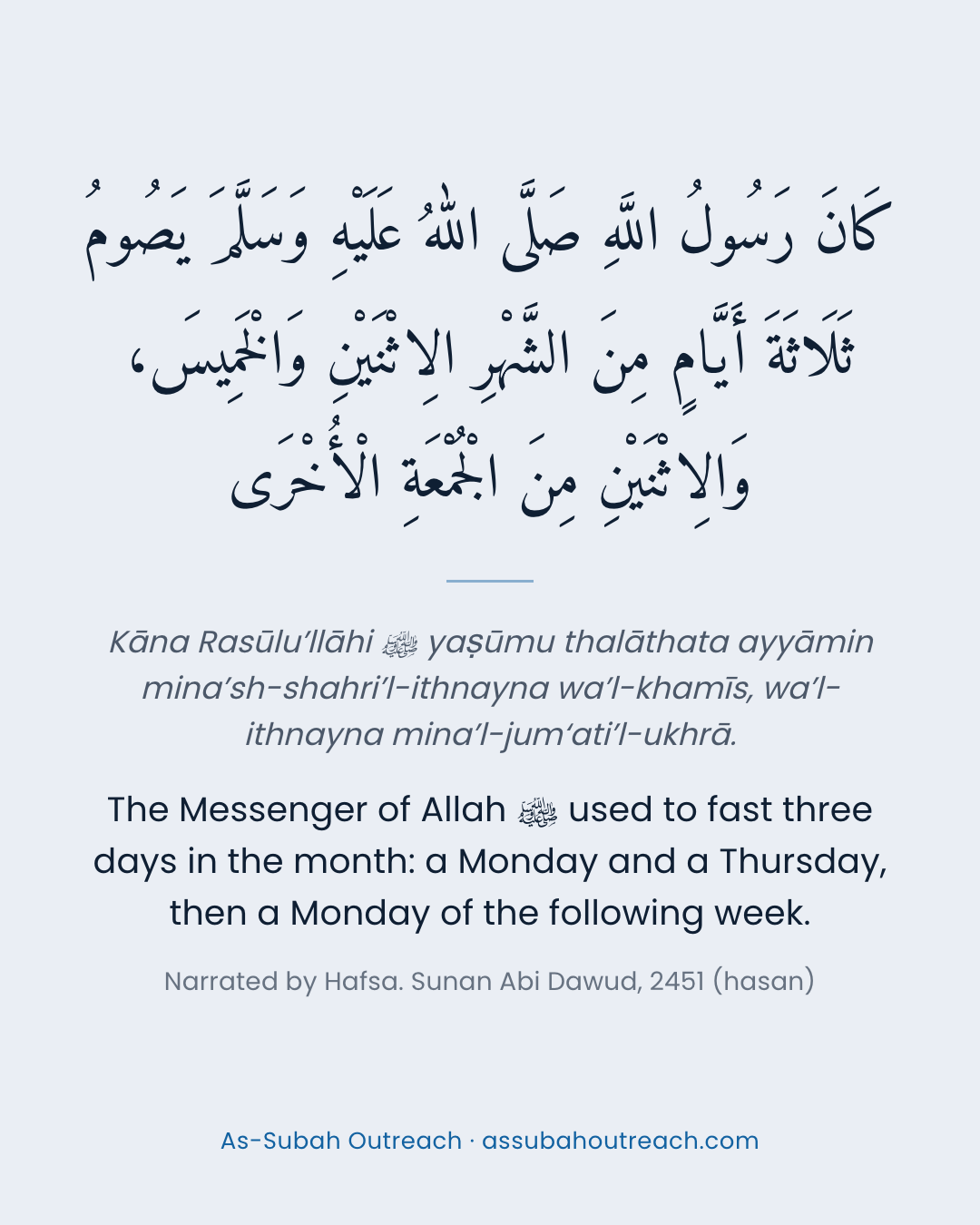
كَانَ رَسُولُ اللَّهِ صَلَّى اللهُ عَلَيْهِ وَسَلَّمَ يَصُومُ ثَلَاثَةَ أَيَّامٍ مِنَ الشَّهْرِ الِاثْنَيْنِ وَالْخَمِيسَ، وَالِاثْنَيْنِ مِنَ الْجُمْعَةِ الْأُخْرَى
Kāna Rasūlu’llāhi ﷺ yaṣūmu thalāthata ayyāmin mina’sh-shahri’l-ithnayna wa’l-khamīs, wa’l-ithnayna mina’l-jum‘ati’l-ukhrā.
The Messenger of Allah ﷺ used to fast three days in the month: a Monday and a Thursday, then a Monday of the following week.
Stage 3: A recommended practice, not a disliked single-day fast
Fasting Monday and Thursday, together or on their own, is recommended (mustahabb), in the same way as fasting Friday alone.1 This is different from fasting ‘Ashura’ alone or a Saturday alone, which some scholars treat with more caution.1 No difference of opinion is recorded on Monday and Thursday fasting itself.
Stage 4: Making it a weekly habit
It is a voluntary fast, so there is no obligation to keep it every single week. It is better held as a steady, light habit than treated as an all-or-nothing rule. For a voluntary fast, you do not need to form the intention the night before; deciding on the morning itself, before you have eaten or drunk anything, is enough.