Stage 1: What iddah means
Iddah is a fixed waiting period that becomes obligatory on a woman when her marriage ends, whether by the death of her husband or by divorce after the marriage was consummated or the couple were alone together.1 It establishes whether she is carrying her former husband’s child, and for a widow it is also a time of mourning.
Stage 2: Iddah after the death of a husband
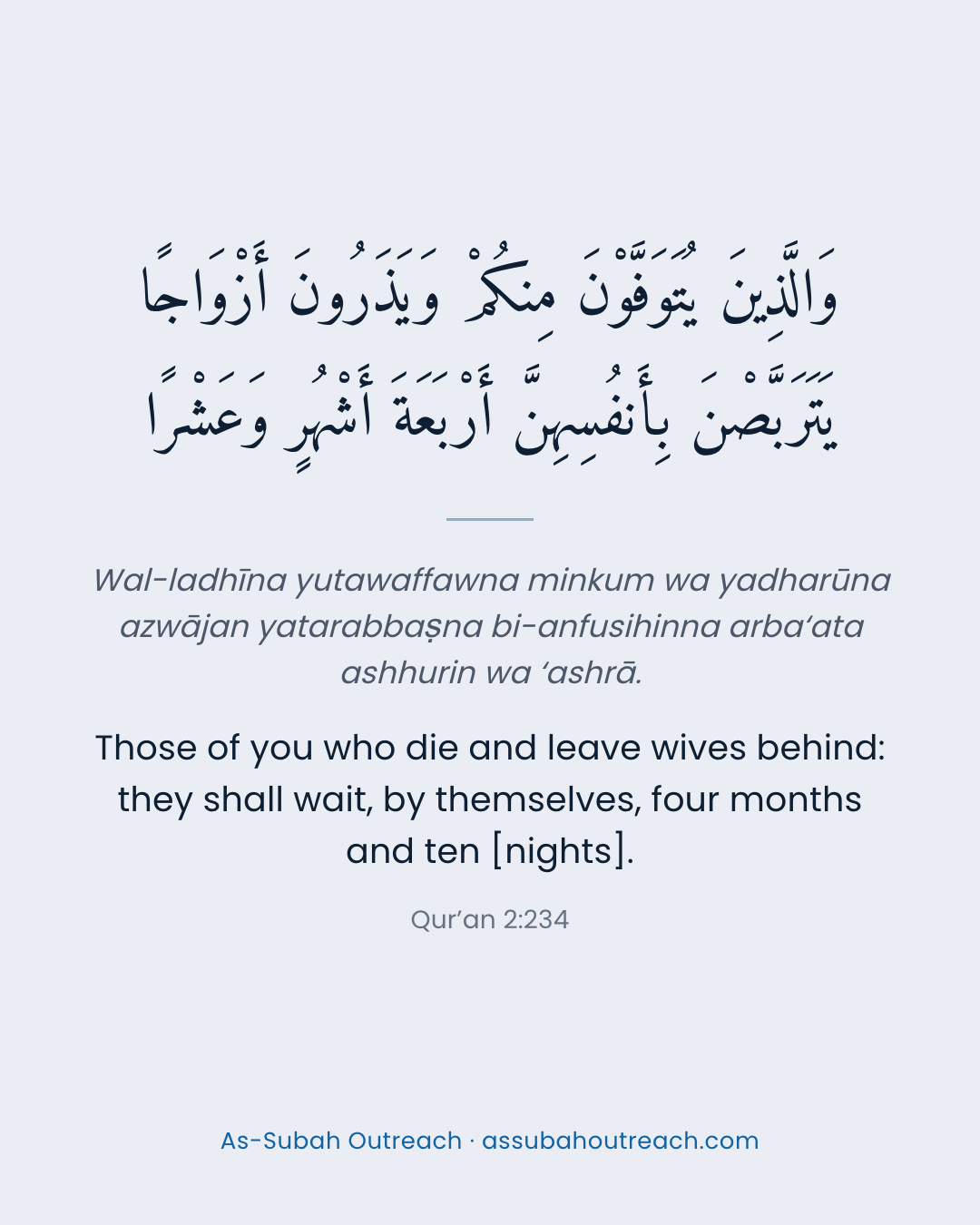
وَالَّذِينَ يُتَوَفَّوْنَ مِنكُمْ وَيَذَرُونَ أَزْوَاجًا يَتَرَبَّصْنَ بِأَنفُسِهِنَّ أَرْبَعَةَ أَشْهُرٍ وَعَشْرًا
Wal-ladhīna yutawaffawna minkum wa yadharūna azwājan yatarabbaṣna bi-anfusihinna arba‘ata ashhurin wa ‘ashrā.
Those of you who die and leave wives behind: they shall wait, by themselves, four months and ten [nights].
A widow’s iddah is four months and ten days, whether or not the marriage was consummated. If she is pregnant, her iddah ends when she gives birth instead (see below).2
During this time she keeps hidad, the mourning described further down. The Prophet ﷺ said from the minbar:
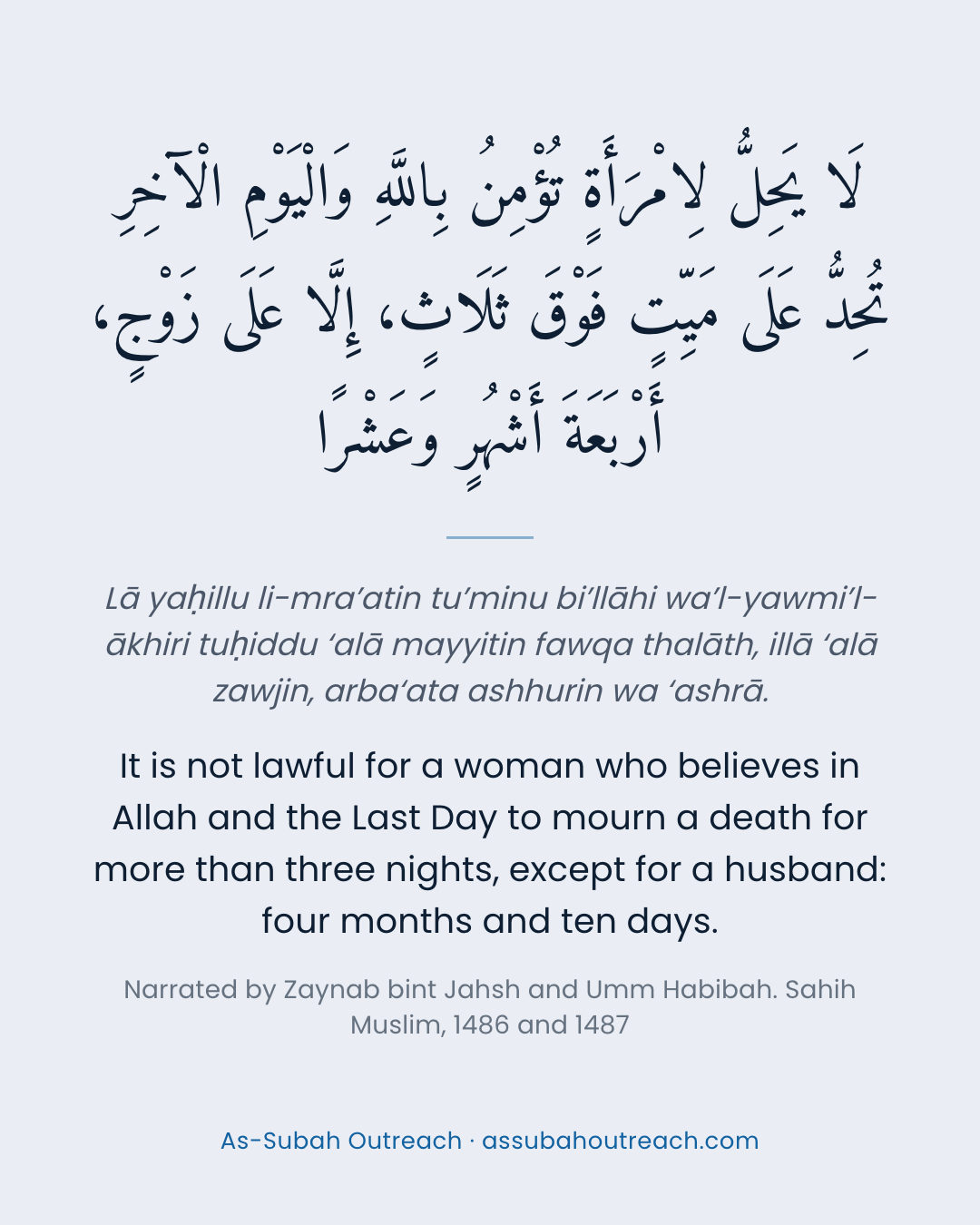
لَا يَحِلُّ لِامْرَأَةٍ تُؤْمِنُ بِاللَّهِ وَالْيَوْمِ الْآخِرِ تُحِدُّ عَلَى مَيِّتٍ فَوْقَ ثَلَاثٍ، إِلَّا عَلَى زَوْجٍ، أَرْبَعَةَ أَشْهُرٍ وَعَشْرًا
Lā yaḥillu li-mra’atin tu’minu bi’llāhi wa’l-yawmi’l-ākhiri tuḥiddu ‘alā mayyitin fawqa thalāth, illā ‘alā zawjin, arba‘ata ashhurin wa ‘ashrā.
It is not lawful for a woman who believes in Allah and the Last Day to mourn a death for more than three nights, except for a husband: four months and ten days.
She spends her iddah in the house she was living in when her husband died. When Furay‘ah bint Malik asked to move back to her family, the Prophet ﷺ told her:
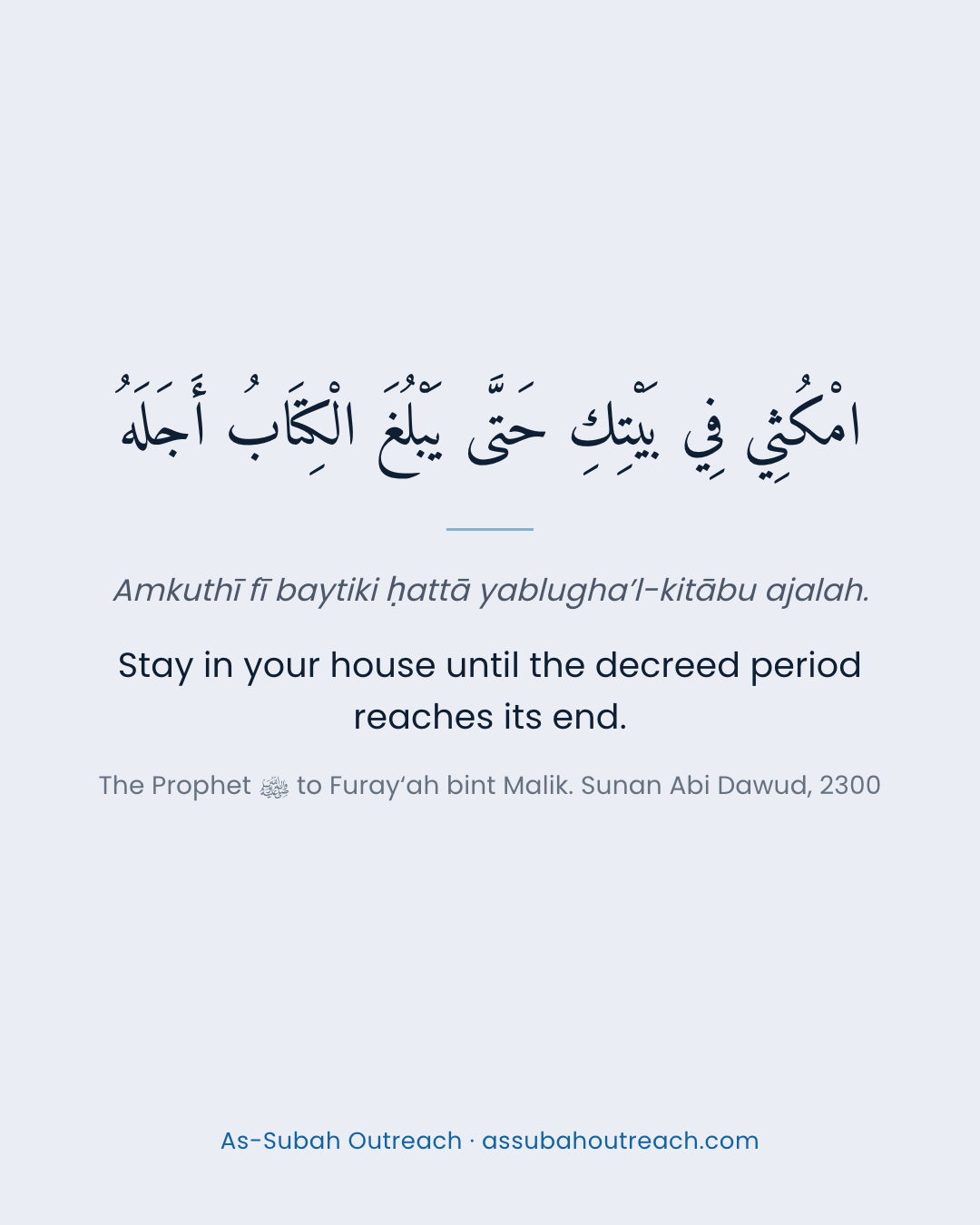
امْكُثِي فِي بَيْتِكِ حَتَّى يَبْلُغَ الْكِتَابُ أَجَلَهُ
Amkuthī fī baytiki ḥattā yablugha’l-kitābu ajalah.
Stay in your house until the decreed period reaches its end.
She stayed there the full four months and ten days, and ‘Uthman ibn ‘Affan later judged by the same ruling.3
Stage 3: Iddah after divorce
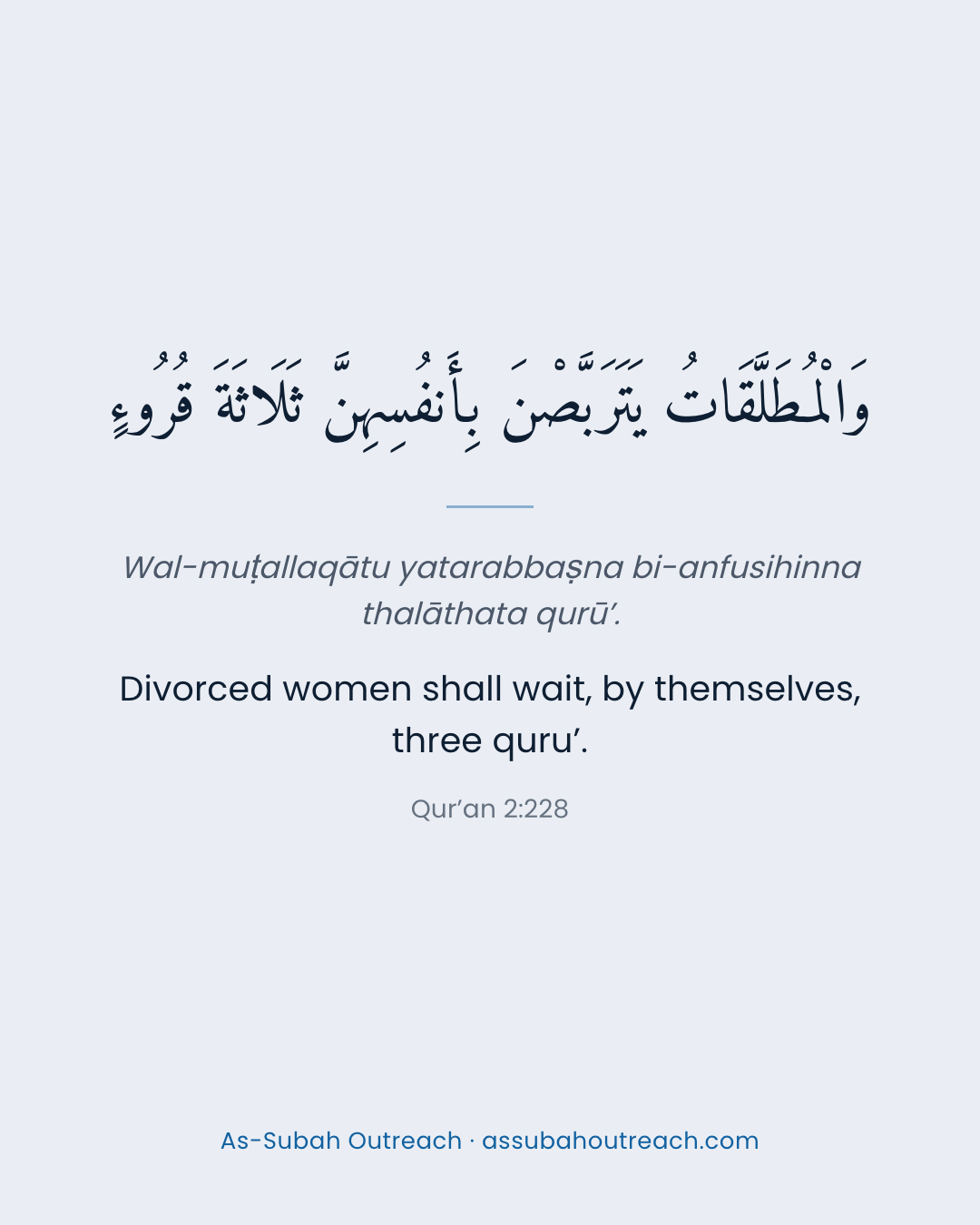
وَالْمُطَلَّقَاتُ يَتَرَبَّصْنَ بِأَنفُسِهِنَّ ثَلَاثَةَ قُرُوءٍ
Wal-muṭallaqātu yatarabbaṣna bi-anfusihinna thalāthata qurū’.
Divorced women shall wait, by themselves, three quru’.
A divorced woman who menstruates waits three quru’, meaning three menstrual periods. Her iddah ends when her third full period after the divorce has finished.4
If she does not menstruate, because she is too young or past menopause, her iddah is three lunar months. If she is pregnant, it lasts until she gives birth.
Stage 4: Iddah during pregnancy, and without periods
وَاللَّائِي يَئِسْنَ مِنَ الْمَحِيضِ مِن نِّسَائِكُمْ إِنِ ارْتَبْتُمْ فَعِدَّتُهُنَّ ثَلَاثَةُ أَشْهُرٍ وَاللَّائِي لَمْ يَحِضْنَ وَأُولَاتُ الْأَحْمَالِ أَجَلُهُنَّ أَن يَضَعْنَ حَمْلَهُنَّ
Wal-lā’ī ya’isna mina’l-maḥīḍi min nisā’ikum ini’rtabtum fa-‘iddatuhunna thalāthatu ashhur, wal-lā’ī lam yaḥiḍna, wa ūlātu’l-aḥmāli ajaluhunna an yaḍa‘na ḥamlahunn.
Those of your women who have reached menopause, if you are in doubt, their iddah is three months, and so is that of those who have not yet menstruated. For those who are pregnant, their term is until they deliver.
A pregnant woman’s iddah, whether she is widowed or divorced, ends when she gives birth, even if that is only days after her husband’s death.
Subay‘ah al-Aslamiyyah gave birth a few nights after her husband died. A man told her she could not remarry until four months and ten days had passed. She went to the Prophet ﷺ that evening, and he told her she was free from the moment she gave birth, and could marry if she wished.5
This includes a pregnancy that ends early, once the foetus has some formed features.6
If a woman of menstruating age finds her periods have stopped for a long time without a known cause, for example while breastfeeding, she remains in iddah until her period returns. If it does not, she waits until she reaches the age of menopause and then keeps three months.7
Stage 5: Iddah after khula
Khula is a release from the marriage that the wife asks for, usually by returning some of what she was given. It counts as an irrevocable divorce, so its iddah is the same as for any divorce: three periods if she menstruates, three months if she does not, or until she gives birth if she is pregnant.8
Stage 6: What a woman in iddah may and may not do
A widow, and a woman in iddah from an irrevocable divorce, keeps hidad: she gives up adornment. A woman in a revocable divorce does not, since her marriage can still resume during her iddah.9
- Jewellery and gold or silver ornaments.
- Silk and new or brightly dyed clothing. Plain clothing that is not worn for adornment is fine.
- Styling the hair.
- Perfume.
- Oil on the hair, even unscented.
- Kohl and henna.
A divorced woman in iddah does not leave the house, by day or night. A widow may go out during the day and for part of the evening, but must sleep in her own home.10 Either way, she stays in the house she was living in at the time.
Family contact continues: her parents may visit her, or she may visit them, without staying the night. She may also go out for real need, such as work she has to do or a debt she must settle.11