Stage 1: What the Islamic New Year is
The Islamic, or Hijri, calendar is a lunar calendar, and its first month is Muharram, so 1 Muharram marks the new year. The calendar counts from the Hijra, the Prophet’s ﷺ migration to Madinah, and the commonly held view among historians is that the Caliph ‘Umar ibn al-Khattab set Muharram of that year as the calendar’s starting point, in preference to other possible dates such as the Prophet’s ﷺ birth or death.1
Stage 2: Is there a specific virtue for 1 Muharram itself?
No hadith instructs or describes any observance, greeting or celebration specifically tied to 1 Muharram or the start of the Hijri year. This is itself the honest answer to give. It is very different from ‘Ashura’ (10 Muharram, within the same month), which has extensive, well-attested hadith material of its own.
Stage 3: What the month of Muharram does carry
أَفْضَلُ الصِّيَامِ، بَعْدَ رَمَضَانَ، شَهْرُ اللَّهِ الْمُحَرَّمُ. وَأَفْضَلُ الصَّلَاةِ، بَعْدَ الْفَرِيضَةِ، صَلَاةُ اللَّيْلِ
Afḍalu’ṣ-ṣiyāmi ba‘da Ramaḍāna shahru’llāhi’l-Muḥarram, wa afḍalu’ṣ-ṣalāti ba‘da’l-farīḍati ṣalātu’l-layl.
The best fasting after Ramadan is in the month of Allah, Muharram, and the best prayer after the obligatory prayers is the night prayer.
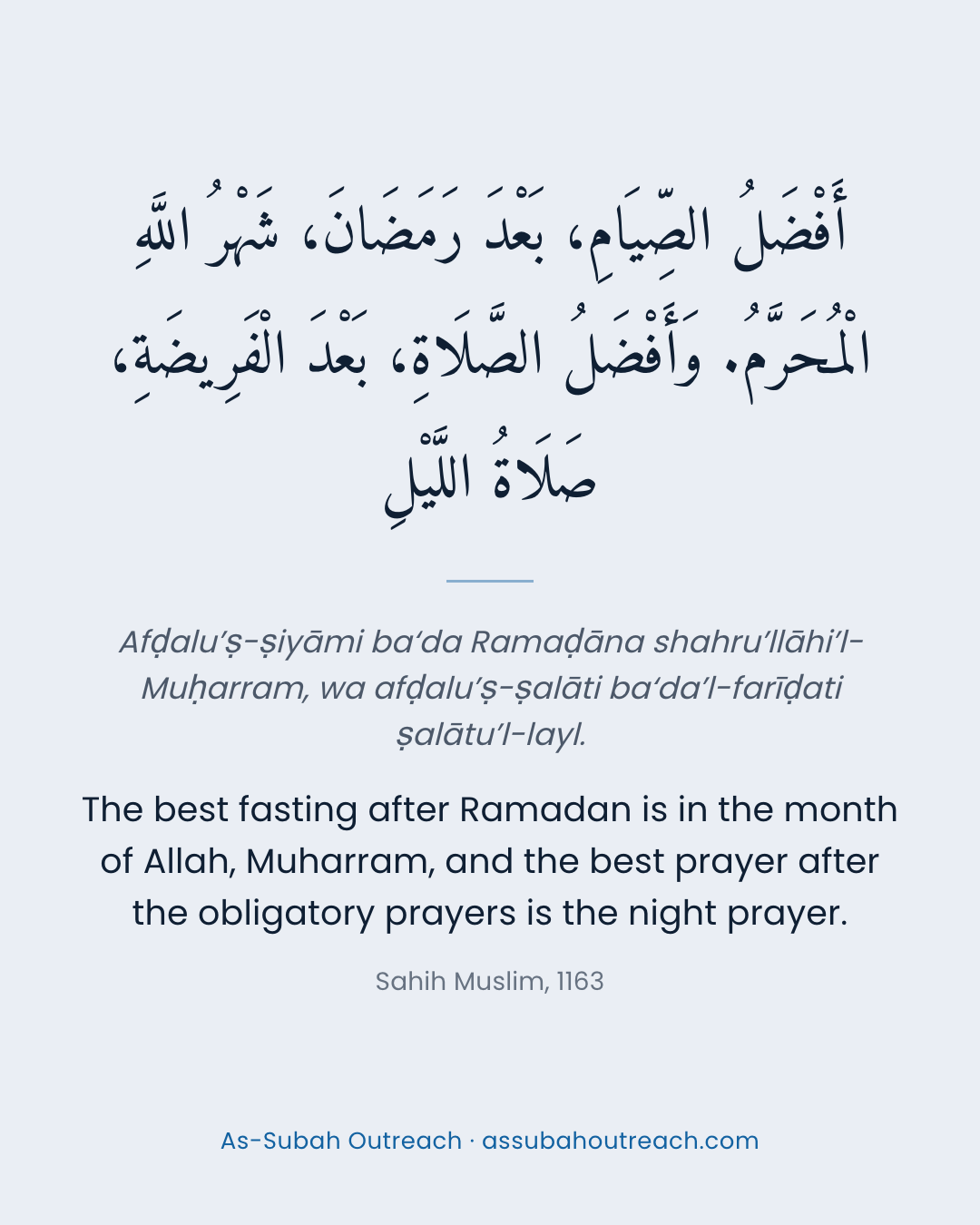
This is a genuine, separately sourced virtue of the month of Muharram as a whole, not of 1 Muharram as “new year’s day” specifically. The Hijri calendar did not exist as a fixed, named system during the Prophet’s ﷺ lifetime, so this hadith is about the month, not about the date marking its start.
If you want to mark the new year with something the Prophet ﷺ is reported to have valued, voluntary fasting during Muharram, and especially on ‘Ashura’ (10 Muharram), is the better-attested place to look, rather than the first day of the month itself.
Stage 4: Is there an Islamic greeting for the new year?
No hadith gives a specific greeting or observance for 1 Muharram, and no sunnah is tied to the day itself.